
Call us now :07971258299
 Send Inquiry
Metallic Exercise Corner Stair Case with Ramp
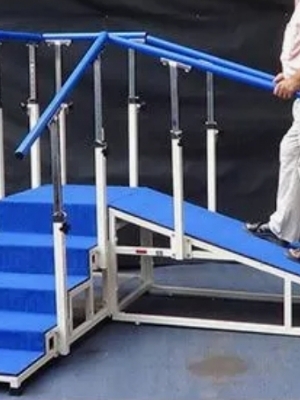

Metallic Exercise Corner Stair Case with Ramp Specification
- Function
- The equipment is designed to help patients practice walking on stairs and an inclined ramp, improving balance, coordination, and muscle strength.
- Suitable For Use
- The product shown is an exercise staircase with a ramp, also known as a training staircase, used for physical therapy and rehabilitation. This type of equipment is suitable for use in the following ways:Rehabilitation: It is used by patients recovering from injuries, surgeries, or neurological conditions to regain strength, balance, and mobility. Mobility Training: The stairs and ramp allow patients to practice essential movements like climbing stairs and walking on an incline in a controlled and safe environment. Physical Therapy: The adjustable handrails provide support and stability, helping therapists guide patients through exercises to improve their gait and coordination.
- Operating Type
- manually
- Storage Instructions
- Based on the product descriptions, the exercise staircase with a ramp is a large piece of equipment designed for use in a clinical setting. The product is typically shipped in a carton and requires assembly at the destination. This suggests that it can be disassembled for transport or storage, but no specific storage instructions are available in the provided information.
- Application
- The product shown is an exercise staircase with a ramp, and its application is primarily for physical therapy and rehabilitation. It is used for ambulation therapy, mobility training, and improving patient recovery. The equipment helps patients practice stair climbing and walking on an incline in a safe and controlled environment.
- Lighting Type
- The lighting type used in the image is not a specific, named product lighting style. The image appears to be lit with general, non-specialized indoor lighting, likely from overhead sources or a simple studio setup. The lighting is functional, illuminating the product and the person without any distinct artistic or technical style like softbox, key light, or rim lighting.
- Use
- The product shown in the image is a corner-type exercise staircase with a ramp, primarily used for physical therapy and rehabilitation. Its uses include:Physical Therapy and Rehabilitation: It is an aid for physical therapists and caregivers to help patients with recovery and mobility improvement. Ambulation and Mobility Training: The equipment is used for ambulation therapy and training to help people learn how to climb stairs. Muscle and Gait Training: It is recommended for strengthening muscles and for gait training. Hospital and Clinic Use: The equipment is used in hospitals and clinics for patient care.
- Set Contains
- The product shown is an exercise staircase with a ramp, designed for physical therapy and mobility training. It is also known as a corner-type staircase due to its L-shape design. The product set contains the following components:Staircase: A section with multiple steps of varying heights, leading to a platform. Platform: A square platform at the top of the staircase. Ramp: An inclined section that rises to meet the platform. Handrails: Height-adjustable handrails on both the staircase and ramp sections to provide support. Construction: The frame is typically made of tubular steel, with steps and platforms made from a commercial board with hardwood reinforcement and a non-slip mat.
- Attributes
- The product shown is an exercise staircase with a ramp, designed for physiotherapy and rehabilitation. Key attributes include:Material: The frame is typically made of tubular steel, while the steps and platform are often made of wood or commercial board. Design: It is a corner-type or L-shaped unit that fits into a corner to save space. It includes both stairs and a ramp.
- Feature
- Handrails are adjustable in height, typically from 60cm to 90cm. Steps have a non-slip mat. Used for gait training, balance recovery, and lower limb strengthening. Suitable for use in physiotherapy clinics and rehabilitation centers.
- Condition
- Best
- Technology
- Wall mounting metallic Exercise Corner Stair Case with ramp
- Size
- The product shown is an exercise staircase, and its dimensions can vary by manufacturer. Based on similar products, here are some typical dimensions in centimeters:Handrails: The inside width of the handrails is often 60 cm, and the height is adjustable from 60 cm to 90 cm. Staircase: The steps are typically 75 cm wide and 25 cm deep. One side may have four steps, each with a height of 15 cm, leading to a platform of 60 cm x 60 cm. Another variation has five steps with increasing heights of 7.5 cm, 10 cm, 12.5 cm, 15 cm, and 17.5 cm. Ramp: The ramp section often rises from 2.5 cm to 60 cm. Overall Width: The overall width of the product is commonly 60 cm.
- Portable
- The product shown in the image is a corner-type exercise staircase with a ramp, used for physical therapy and rehabilitation. It is also known as a rehabilitation ramp exercise staircase or a physio staircase.
- Operation Mode
- manual
- Adhesive Type
- The product is a training staircase with a ramp, which is a type of physiotherapy equipment. The steps and ramp are made of a commercial board and are covered with a non-slip matting. The search results describe the use of non-slip matting but do not specify the type of adhesive used to secure it.
- Shape
- L - Shape
- Material
- The physiotherapy exercise staircase shown in the image is typically made from a combination of materials, including steel, iron, plywood, and PVC.Frame and Supports: The supporting frame and uprights are often constructed from tubular steel or iron. Steps and Ramp: The steps and ramp are commonly made of plywood or a commercial board, often with a non-slip mat or surface covering. Handrails: The handrails are frequently made of PVC-sheathed iron tubing.
- Dimension (L*W*H)
- 60 cm x 60 cm x 60 cm Centimeter (cm)
- Color
- The staircase and ramp are typically blue.
- Wall Mounted
- Based on the image, the product is an Exercise Staircase with a Ramp, which is a freestanding piece of rehabilitation equipment, not a wall-mounted product. It is designed to be a corner unit to save space.
- Warranty
- 1 year warranty
- Recyclable
- Yes
- Recommended For
- Joints, Cervical, Muscles
- Treatment
- This information is for general knowledge and should not be considered a substitute for professional medical advice. Always consult with a qualified healthcare professional for diagnosis and treatment.
- Pressure Range
- The product shown is an exercise staircase with a ramp, used for physiotherapy. While a specific "pressure range" is not a standard specification for this type of equipment, the product capacity is listed as 50-80. This likely refers to the weight capacity in kilograms.
- Frequency Range
- 50 Hertz (Hz) Hertz (HZ)
- Usage
- The product shown is a rehabilitation staircase with a ramp, also known as an exercise staircase. It is used primarily for physical therapy and mobility training.UsageRehabilitation: The staircase and ramp are used by physical therapists to help patients recover from injuries or surgeries by practicing stair climbing and walking on an incline. Mobility Training: The equipment is designed to improve a person's coordination, balance, and muscle strength. Safety Features: It is typically equipped with non-slip surfaces on the steps and ramp, as well as handrails at different heights to ensure safety and stability for both adults and children during exercises. Space-Saving Design: Some models are built in a corner or L-shape to save space in a clinic or hospital.
- Age Group
- Children, Adults, Women, Elders
- Display
- NIL
- Power Source
- Manual
Metallic Exercise Corner Stair Case with Ramp Trade Information
- Minimum Order Quantity
- 1 Piece
- FOB Port
- By Transport and By Air
- Payment Terms
- Cash Against Delivery (CAD), Cash on Delivery (COD), Cash Advance (CA), Cash in Advance (CID), Cheque, Letter of Credit (L/C)
- Supply Ability
- 1 Piece Per Week
- Delivery Time
- 1 Week
- Sample Policy
- Sample costs shipping and taxes has to be paid by the buyer
- Main Export Market(s)
- Asia, Australia, Central America, North America, South America, Western Europe, Middle East
- Main Domestic Market
- All India
About Metallic Exercise Corner Stair Case with Ramp
The product shown is an exercise staircase with a ramp, designed for physiotherapy and rehabilitation. Here is a detailed product description based on the image and available information: Type: Corner-type exercise staircase with a ramp. Purpose: Used for physiotherapy, rehabilitation, and mobility training. Construction: The frame is made of steel tubing, with some models featuring a powder-coated finish. The steps, ramp, and platform are covered with non-slip matting for safety.Multifunctional Design for Physiotherapy
This exercise staircase features both steps and an inclined ramp, making it ideal for various rehabilitation exercises. Its L-shape allows it to fit neatly into corners, maximizing space in busy clinics. Patients can practice stair climbing and walking on inclines, ensuring comprehensive lower limb rehabilitation.
Safety and Durability Assured
Constructed from tubular steel and reinforced wood, the equipment is designed for stability and longevity. Non-slip matting on steps and ramps, along with height-adjustable PVC-coated handrails, offer security during use. The product can accommodate most patients with its 50-80 kg weight limit.
Portable and User-Friendly Setup
Shipped in sections for assembly at your facility, this corner staircase is portable and can be disassembled for storage if required. The manual operation mode means no electricity is needed, making it suitable for any rehabilitation environment.
FAQs of Metallic Exercise Corner Stair Case with Ramp:
Q: How is the Metallic Exercise Corner Staircase with Ramp typically used in therapy?
A: This equipment is used for rehabilitation exercises, including stair climbing, ramp walking, gait training, and balance retraining. Patients recovering from surgery, injury, or neurological conditions use it to rebuild strength and mobility under supervision.Q: What safety features are included with this staircase and ramp?
A: The staircase is equipped with height-adjustable handrails for personalized support, and the steps and ramp surfaces are covered with non-slip matting to reduce the risk of slipping. The sturdy steel frame ensures stability and patient safety during exercises.Q: Who is suitable to use this exercise staircase with ramp?
A: It is suitable for a broad range of patients, including children, adults, elderly individuals, and women, particularly those needing physiotherapy for joints, muscles, or after surgeries. Usage should always be guided by a qualified therapist.Q: Where is the best place to install this unit?
A: The L-shaped, freestanding design allows this staircase to be set up in corners of physiotherapy clinics, hospitals, or rehabilitation centers. It is not a wall-mounted product and can be relocated as needed.Q: What is the process for assembling and storing the product?
A: The staircase is delivered in disassembled form for ease of transport. It requires basic assembly on-site and can be taken apart for storage if necessary. No special tools are usually required.Q: What are the main benefits of using this rehabilitation staircase and ramp?
A: It helps patients safely relearn stair climbing and ramp walking, strengthens lower limb muscles, improves balance and coordination, and increases patient confidence in mobility.Q: Is the unit environmentally friendly and does it come with a warranty?
A: Yes, the materials used are recyclable, and the product is supplied with a 1-year warranty to ensure long-term reliability for rehabilitation centers.Tell us about your requirement

Price:
Quantity
Select Unit
- 50
- 100
- 200
- 250
- 500
- 1000+
Additional detail
Mobile number
Email

More Products in Physiotherapy Equipment Category
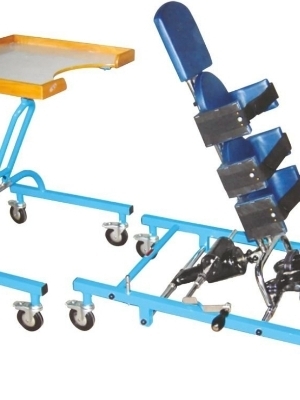
Manual Standing Positioner/ Prone Standing
Price 12000 INR / Piece
Minimum Order Quantity : 1 Piece
Warranty : 1 year warranty
Shape : rectangular
Weight : 40 kg Kilograms (kg)
Condition : Best
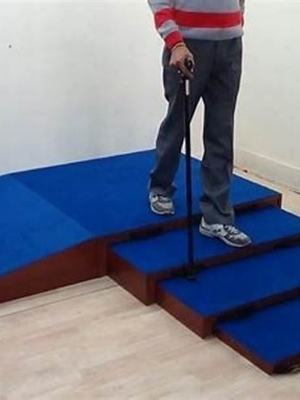
Curbs and ramp (without handrails)
Price 12000 INR / Piece
Minimum Order Quantity : 1 Piece
Warranty : 1 year warranty
Shape : Rectangular
Weight : 128.8 kg Kilograms (kg)
Condition : Best
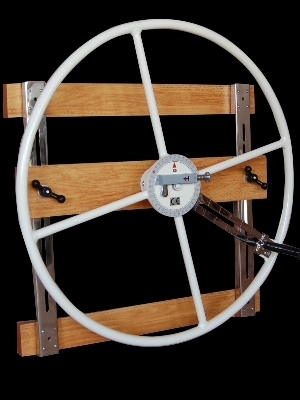
Shoulder Wheel
Price 6500 INR / Piece
Minimum Order Quantity : 1 Piece
Warranty : 1 year warranty
Shape : Circle
Weight : 45 kg Kilograms (kg)
Condition : Best
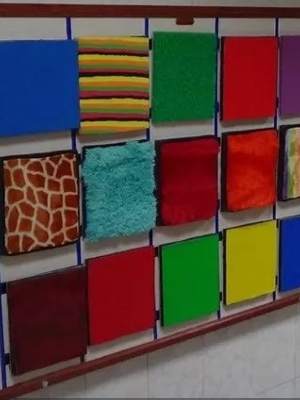
Textured Tactile Sensor Wall Panel
Price 9800.0 INR / Piece
Minimum Order Quantity : 1 Piece
Warranty : 1 year warranty
Shape : Rectangular
Weight : The exact weight of the specific sensory wall panel shown in the image is not specified in the available information, as weights vary significantly depending on the manufacturer and model.Weight variations: Similar textured tactile wall panels can have different weights.Examples of weights:One model might weigh around 2 kg (approximately 4.4 lbs). Another model is listed at 10 kg (approximately 22 lbs). Larger, different brand models can weigh around 48 lbs (approximately 21.8 kg). Kilograms (kg)
Condition : Best

 Send Inquiry
Our Products

B-62, Aggarwal Colony, Rajdhani Park, Nangloi,New Delhi - 110041, India

Mr. Rajesh Pathak
(Proprietor)
Mobile :07971258299
 Send Inquiry
 Send SMS
 Call Me Free
Developed and Managed by Infocom Network Private Limited.
